


Espresso beans for De'Longhi coffee machines
What are De'Longhi coffee beans?
These are espresso beans that work well in a De'Longhi bean-to-cup machine such as the Magnifica, Eletta or PrimaDonna: De'Longhi's own Selezione beans and other blends with a medium to dark roast and a dry surface. Below you can read what the grinder needs from a bean and how to set it.

-
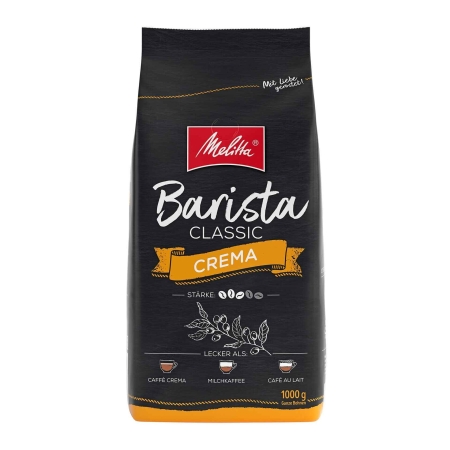 Melitta Barista Classic Crema - coffee beans - 1 kgChocolaty 6 - RegularAs low as 12.5112.51 / kg

A De'Longhi bean-to-cup machine grinds every cup fresh, so the beans you pour into the hopper decide more than the flavour alone: they also decide how smoothly the grinder runs and how often the machine needs cleaning. On this page you will find De'Longhi's own beans alongside other espresso beans that suit models such as the Magnifica, Eletta and PrimaDonna.
What the grinder needs from a bean
The built-in burr grinder feeds itself from the hopper. Very dark, shiny beans carry oil on the surface. That oil makes the beans stick together, so they stop sliding down to the burrs, and it leaves a film on the grinder and the brewing unit. Flavoured beans do the same with their coating. A medium to dark roast with a dry, matt surface avoids both problems and still gives a full espresso.
- Roast level: medium to dark for espresso and milk drinks
- Surface: dry and matt rather than glossy
- No flavoured beans in the hopper
- Freshness: look at the roast date as well as the best-before date
Setting the grinder on your De'Longhi
Most De'Longhi bean-to-cup machines have a grind dial inside the bean compartment. Turn it only while the grinder is running, and one step at a time, because the change only shows after a couple of cups. If the coffee comes out in drips and tastes harsh, go a step coarser. If it runs fast, looks pale and tastes thin, go a step finer. The strength or aroma setting changes how much coffee is ground per cup, so try that first if a cup is simply too weak or too strong.
De'Longhi's own coffee beans
De'Longhi also sells beans under its own name, such as the Selezione range, some of them made together with the Italian roaster Kimbo. The range runs from 100% Arabica to blends with Robusta, and there is a decaffeinated option. Packs go from 250 g to 1 kg: a 250 g bag is a sensible way to try a blend, and a 1 kg bag makes more sense once you know what you like.
Arabica, Robusta or a blend?
In a bean-to-cup machine the choice shows mostly in the crema and in how the coffee stands up to milk. A blend with some Robusta beans gives a thicker crema and a firmer, more bitter edge that still comes through in a cappuccino or latte. 100% Arabica coffee beans for De'Longhi taste softer and more aromatic, which suits a straight espresso or a lungo but can taste flat under a lot of milk.
Keeping the beans fresh
The bean hopper on a De'Longhi is not airtight, and the beans in it sit on top of a warm machine. Fill it with what you will use in a few days and keep the rest of the bag closed in a cool, dark cupboard. Stale beans grind unevenly and give a paler, thinner cup, however well the grinder is set.
Other espresso beans for your De'Longhi
Beans do not have to carry the De'Longhi name to work in the machine. Italian espresso blends, single-origin coffees and organic beans all do well as long as they meet the points above. Browse our espresso coffee or the full range of coffee beans, and when the machine is due for maintenance, you will find a De'Longhi descaler in our equipment range.
Coffee beans for other bean-to-cup machines: all machines, Jura, Philips, Krups, Siemens, Sage, Melitta, Nivona, Saeco, Miele, Bosch