


Coffee beans for bean-to-cup coffee machines
Which coffee beans suit a bean-to-cup machine?
A bean-to-cup machine grinds every cup fresh, so coffee machine beans have to suit the grinder as well as your taste. Choose plain roasted beans with nothing added: flavoured or coated beans leave a sticky residue in the grinder and brew group, and very oily beans do the same over time. A medium to dark roast is the safe choice for most machines, and a blend with some robusta gives a thicker crema.

-
-
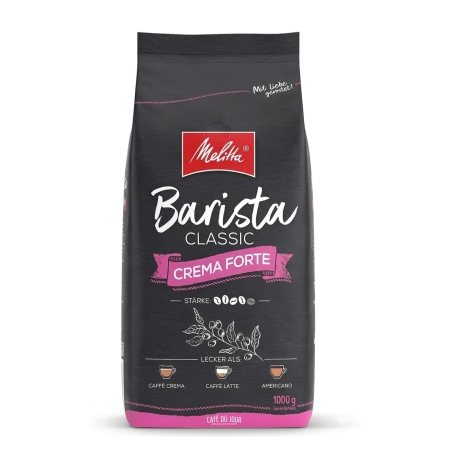 Melitta Barista Classic Crema Forte - coffee beans - 1 kgChocolaty, Nutty 8 - StrongAs low as 12.5112.51 / kg
 -
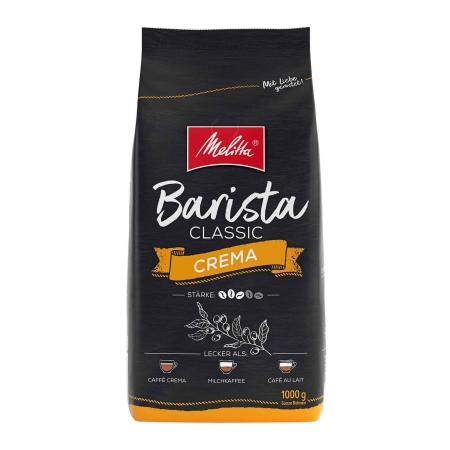 Melitta Barista Classic Crema - coffee beans - 1 kgChocolaty 6 - RegularAs low as 12.5112.51 / kg


Not every bean suits every bean-to-cup machine. The grinder, brew group and milk system differ between manufacturers, and even between models of the same brand. A few simple rules will still get you a good cup from almost any machine.
What to look for
- Plain roasted beans only. Flavoured or coated beans leave residue that clogs the grinder and brew group.
- Beans without a heavy, oily sheen. Oily beans stick to the walls of the hopper and can stop feeding into the grinder.
- A medium to dark roast. Most bean-to-cup machines grind it evenly without any fuss.
- Some robusta in the blend if you drink a lot of milky coffee: it gives a thicker crema that holds up under frothed milk.
- Patience with the grind setting. Change it one step at a time and give it a couple of cups before you judge the result.
Coffee beans by brand
We have a page with suggested beans for each of these machine brands: Jura, De'Longhi, Melitta, Nivona, Saeco, Philips, Krups, Siemens, Bosch, Miele and Sage. A few things are worth knowing before you click through:
- Philips and Saeco are sister brands, so the same beans work in both: a medium to dark roast with plenty of body.
- Siemens and Bosch are sister brands too, with much the same needs when it comes to grind size and oil content.
- Sage machines let you adjust the grind in fine steps, which makes lighter roasts easier to dial in than on most other machines.
Beans that work well in a bean-to-cup machine
These grind evenly and give a steady crema in most machines:
- Café du Jour 100% Arabica Brazil – roasted in our own roastery; a medium roast of pure arabica.
- Café du Jour Espresso Madrugador – freshly roasted arabica-robusta blend for a thicker crema.
- Segafredo Intermezzo – an arabica-robusta blend, medium roast, with chocolatey notes.
- Kimbo Caffè Crema Classico – a crema blend with nutty and caramel notes.
- L'OR Harmonieux Espresso – 100% arabica, medium roast, mild and nutty; good for espresso and lungo.
- Lavazza ¡Tierra! Brazil – an arabica-robusta blend for a full-bodied espresso with a nutty finish.
- Kimbo Espresso Bar Extra Crema – dark roasted, for a strong espresso with a dense crema.
Machine-brand beans or freshly roasted?
Some machine makers sell their own beans, blended with their machines in mind. They work reliably, but they tie you to one or two flavours. Beans from a roaster give you far more choice in roast level, origin and taste, and they work just as well in your machine as long as they are unflavoured and not too oily. Whichever you use, buy an amount you will get through in a few weeks and only fill the hopper with what you need for a day or two: beans left sitting in the hopper lose their aroma quickly.
When the beans are the problem
A lot of bean-to-cup trouble starts with the beans rather than the machine. If the grinder runs but little or no coffee comes out, oily beans may be sticking in the hopper: give them a stir, clean the hopper and switch to a drier roast. If the coffee tastes thin and sour, grind a step finer; if it tastes harsh and bitter, go a step coarser or try a lighter roast. And if the crema has disappeared, the beans are often simply stale.