



Coffee machine descaler: liquid, powder and tablets
What does a coffee machine descaler do?
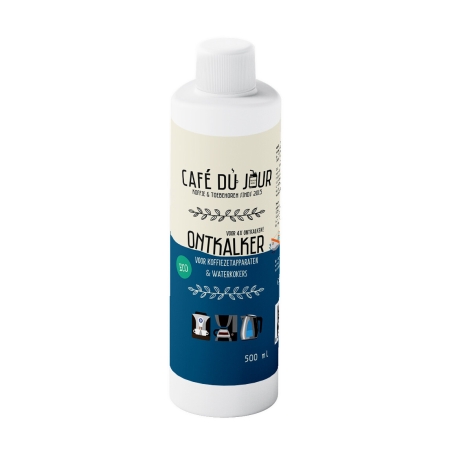
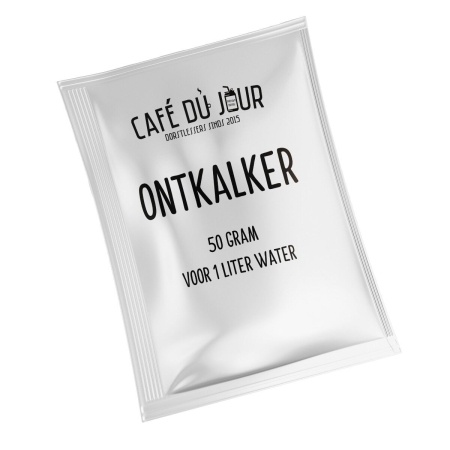
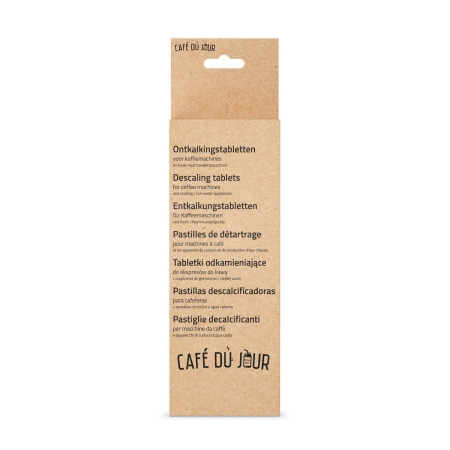
A coffee machine descaler dissolves the limescale that builds up inside your machine when calcium and magnesium from the water settle on the heating element and in the pipes. Here you find universal descalers that suit most coffee machines: a liquid in a 500 ml bottle, descaling powder in sachets, and descaling tablets. Your machine's manual tells you the dose and the programme.

-
-

-

-
-


Why descale your coffee machine?
Limescale insulates the heating element, so the machine has to work harder to heat the water. You notice it in the cup before you see it:
- Coffee comes out less hot than it used to.
- The machine makes more noise than normal.
- Water takes longer to run through.
- The coffee starts to taste flat.
- In the end, limescale build-up can damage internal parts.
How often should you descale?
Most manufacturers advise descaling every two to three months with normal use, and more often if your water is hard. Many machines show a prompt when it is time. If yours does not, a kettle full of limescale is a good sign that your coffee machine needs attention too.
Liquid, powder or tablets?
All three do the same job. The difference is in how you dose them.
Descaling liquid
The universal bottle descaler contains 500 ml, enough for four descaling cycles. You pour the measured amount into the water tank and top up with water. Easy if you like to dose by eye on a measuring line.
Descaling powder
Powder comes in pre-measured sachets, so there is nothing to measure: one sachet is one descale. Dissolve it in water before you pour it into the tank. Choose the universal bag of descaling powder for a single descale, or the Café du Jour Descaler in 50 g sachets, sold singly or as a pack of four.
Descaling tablets
The Café du Jour descaling tablets come six to a pack. Let a tablet dissolve in the water tank and start the programme. The quickest option if you do not want to measure anything.
Universal or a brand descaler?
A universal descaler suits most espresso machines, bean-to-cup machines, pod machines and filter coffee makers. Some manufacturers specify their own product in the manual or in the warranty terms; if yours does, follow it. Owners of a De'Longhi can also choose a De'Longhi descaler, and for filter machines there is a separate descaler for coffee makers. The full range is under descaler.
How to descale a coffee machine, step by step
- Take any water filter out of the tank, empty the tank and rinse it.
- Add the descaler with the amount of water given on the packaging.
- Put a large container under the spout and the steam wand.
- Start the descaling programme from the machine's menu and let it run to the end. This usually takes twenty to forty minutes.
- Rinse the tank thoroughly and fill it with clean water.
- Run one or two rinse cycles, then refit the water filter.
No descaling programme on your machine? Follow the manual; you usually run the solution through in portions, with short pauses in between, and rinse more thoroughly afterwards.
Descaling is one part of maintenance
A descaler removes limescale, but not coffee oil or milk residue. For a machine that keeps making good coffee, combine it with:
- Cleaning tablets: remove coffee oils from the brew group.
- Milk system cleaner: keeps the milk frother and its tubes clean.
- Water filters: slow down limescale build-up, so you need to descale less often. They do not replace descaling.
You will find all of this under maintenance and cleaning. For cups, jugs and other extras, see our coffee accessories and barista tools.